
Driveway Sealer Weather Window Calculator
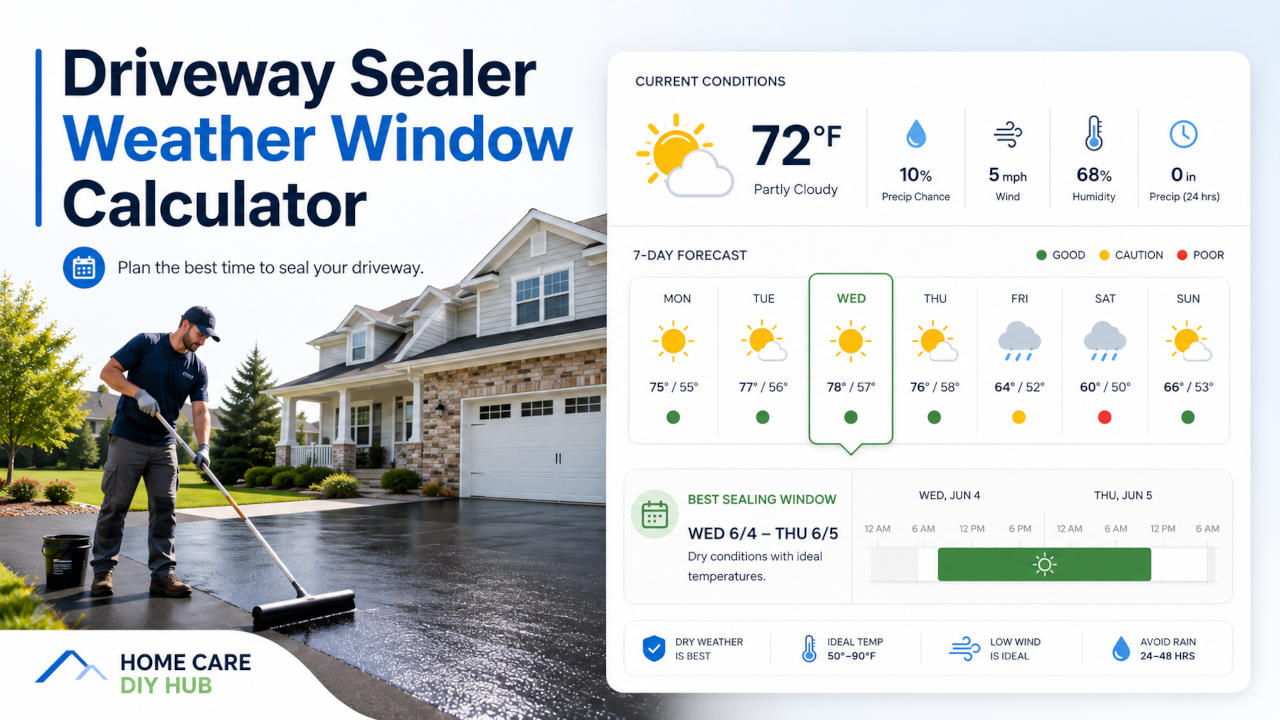
Driveway Sealer Weather Window Calculator checks temperature, humidity, rain, surface dryness, and overnight lows before you open the sealer. Enter the full weather window to see what supports the job and what should make you wait.
Check Your Weather Window
This is a planning guide, not a replacement for the product label. Always follow the sealer manufacturer's minimum temperature, rain, recoat, and traffic instructions.
Best temperature range
Many driveway sealers work best between about 50 and 85 degrees F. Lower temperatures slow curing. High heat and direct sun can make film-forming sealers dry too fast at the surface.
Rain-free window
Plan for at least 24 hours without rain after the final coat unless the label clearly says less. Some standard products and damp conditions need closer to 48 hours.
Traffic timing
Foot traffic may be possible the same day, but vehicle traffic usually needs 24 to 48 hours for standard products. Cool, humid, or shaded driveways need longer.
How the Calculator Judges the Window
The calculator weighs four practical risks: whether the surface is dry enough, whether air and overnight temperatures are inside the sealer's working range, whether humidity or dew will slow curing, and whether rain may arrive before the final coat has skinned over and cured enough.
It adds extra time for cool temperatures, high humidity, shade, dew, and two-coat jobs. If a condition is likely to cause bonding problems, cloudy sealer, wash-off, or soft tire marks, the result changes from good to caution or wait.
Conditions to Check Before You Seal
- Clean and dry the driveway first. If water beads on oil spots, the sealer will not bond properly.
- Do not seal when rain, sprinklers, dew, or fog can reach the surface before the product has enough dry time.
- Avoid very thick coats. Two thin coats usually cure better than one heavy coat.
- Block vehicles until the final coat has cured long enough for your product and weather.
Reference Notes
- Use the product label first. Driveway sealer cure windows vary by chemistry, coat thickness, pavement temperature, shade, and humidity.
- For sealer failure diagnosis and prep, see Why Is My Driveway Sealer Peeling?
- For concrete cure and weather timing, see Curing Concrete in Different Climates at Home.
- Staining a deck soon? Try the Deck Staining Weather Window Calculator.
- External references used for the timing logic include manufacturer and industry guidance fromSealBest,Latexite, and theASCC/DCC sealer guide.
Looking for Step-by-Step Guides?
Browse the resource library for project prep, repair steps, and material notes.